Keeping Every Room Comfortable
Ductless Mini-Split Maintenance in Dalton & Chatsworth, GA
A ductless system is a set of separate indoor heads that share one outdoor unit, so a problem in one room can go unnoticed until another room feels it. Routine maintenance checks every head, the outdoor condenser, and the controls as one connected system. At True Temp Heating & Air, we provide mini-split maintenance and tune-ups for homes in Dalton, Chatsworth, and across our service area, including Rocky Face, Varnell, Beaverdale, and Eton. Mitsubishi is one of the ductless brands we work with, and we work on all makes. Each visit ends with a written record of what we found and what it means for your home.
Share Your System Details
Send Us the Details of Your Ductless System
Tell us how many indoor heads your system has, its make if you know it, and when it was last serviced. Note any room that heats or cools differently from the others, and any drip, noise, or remote problem you have noticed. Those details help us plan the visit before it starts, so the time on site goes to the work that matters. We will plan a visit that suits your schedule, and our team will confirm the details with you before the appointment. If a room is already showing a fault, our mini-split repair services address it directly, our mini-split installation services explain how a new system is planned, and the mini-split overview covers the full range we service.

A Ductless Maintenance Team That Knows Every Room
A mini-split tune-up is only as good as the attention paid to each indoor head. The points below explain how our team approaches that work and why it matters for long-term comfort. You can read our company background or meet the team before you book.
How a Ductless Tune-Up Moves From Room Inventory to Written Results
Every ductless tune-up follows the same order, so the readings from one visit can be compared with the next. The order also keeps every indoor head in view, not only the one that prompted the call. Each stage builds on the one before it, so a finding in the outdoor unit is always read against what the indoor heads showed.
1. Inventory Every Indoor Head and Its Controls
We start by listing each indoor head and the controls that run it, because a multi-head system is easier to diagnose once every room is accounted for. This stage sets the plan for the rest of the visit, so the time we spend on each head follows what the household has actually noticed.
- Record the location, model, and approximate age of each indoor head
- Note which room each head serves and which remote or wall controller runs it
- Ask whether any room has felt too warm, too cool, or slow to respond
- Review how the household uses each zone during the day and overnight
- Check whether any head has been replaced, moved, or repaired since the last visit
- Confirm whether any room has been added, closed off, or changed in use
2. Clean and Inspect Each Indoor Head
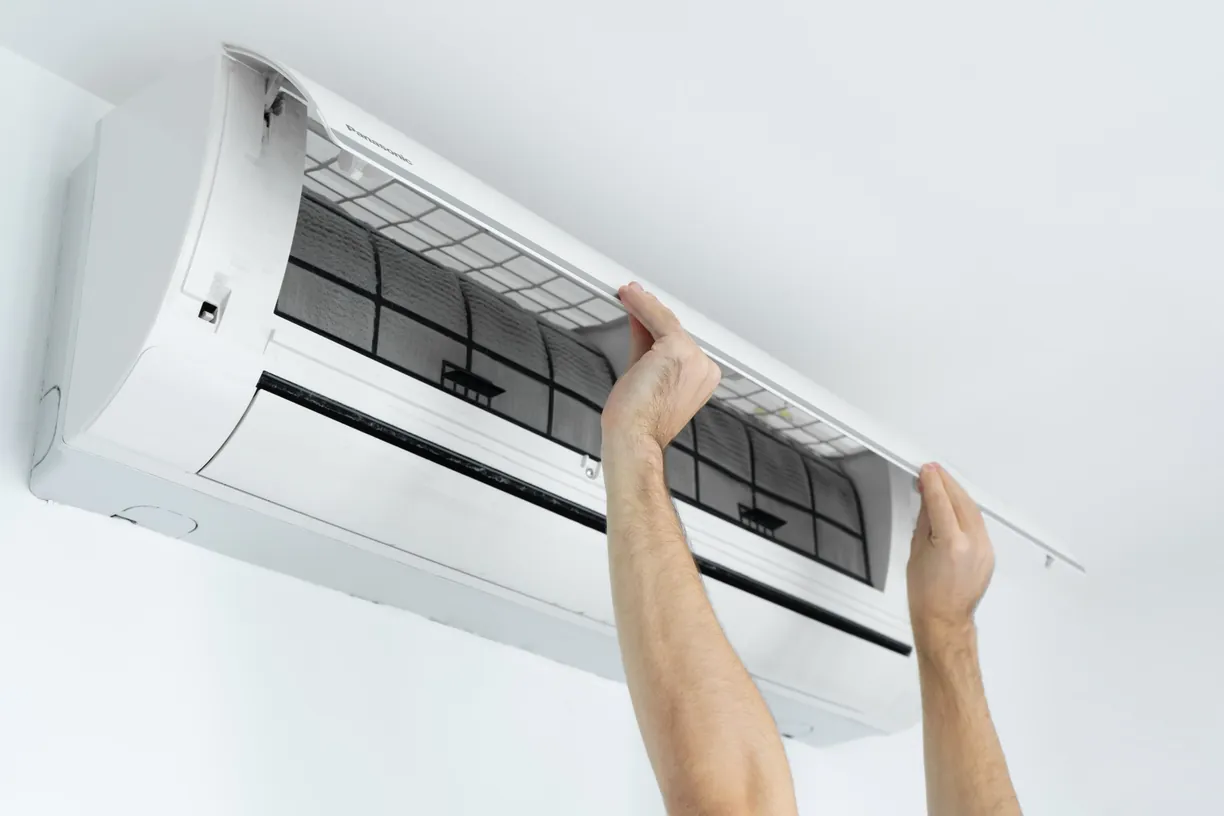
The indoor heads move the air you feel, and they collect dust fastest. We work through them one at a time so that no room is skipped, and we note the condition of each head before moving to the next. A head that looks clean on the outside can still have a restricted coil or a slow drain, so each part is checked on its own.
- Clean the filters and front panels of each indoor head
- Inspect the indoor coil for dirt, biological growth, and blocked fins
- Check the blower wheel and fan motor for dust, balance, and unusual noise
- Clear the condensate drain at each head and check the drain pan for standing water
- Confirm that the louvers swing freely and direct airflow as designed
- Look for signs of water staining or mold around the mounting plate and wall opening
3. Check the Outdoor Condenser and Its Electrical Parts
The outdoor condenser serves every indoor head, so its condition affects the whole system. We inspect its airflow and electrical connections before we measure performance, because a weak point at the condenser can look like a fault in a single room.
- Clean the outdoor coil and clear debris, leaves, and vegetation from around the cabinet
- Inspect the outdoor fan motor, blade, and bearings for wear or rubbing
- Check the compressor's capacitor and contactor for scorching, pitting, or loose connections
- Confirm that the outdoor unit sits level and has the clearance it needs for airflow
- Inspect the disconnect, wiring, and line set insulation for damage or exposure
- Check the mounting pad and bracket for settling, corrosion, or vibration
4. Measure Performance and Confirm Each Zone Runs
Readings show how well the system moves heat in each direction. We compare them with the expected operating range for the equipment and record each value, so the trend stays visible over time. Measuring each zone separately matters most in a multi-head home, because one room can run well while another is working harder than it should.
- Read refrigerant pressures and compare them with the expected range for the equipment
- Measure supply and return temperatures at each indoor head we can access safely
- Confirm that each zone reaches its setpoint and cycles without short cycling
- Check the remote, wall controller, and any room sensors for correct response
- Review whether any current rebates and offers apply to the work we recommend
- Compare each zone's readings with the values recorded at the last visit
5. Deliver Written Findings and Next-Visit Recommendations
The visit ends with a written record for each indoor head and the outdoor unit, so you know what the system needs before the next season. We review it with you before we leave the property, and we answer any question about a line item before the summary is filed.
- Summarize each indoor head's condition alongside the readings taken for it
- Separate items that need attention now from those that can wait
- Recommend when the next tune-up should happen, based on your use of the system
- Describe how our maintenance plan can keep these checks on a regular schedule
- Keep a copy of the findings so the next visit starts from this record
- Schedule your next visit once you have reviewed the findings


What Dalton & Chatsworth Customers Say About Our Heating and Cooling Company
Good reviews don't come from advertising — they come from showing up and doing the work right. Here's what our neighbors across North Georgia have to say about True Temp Heating & Air.
HVAC Maintenance Plans for Dalton & Chatsworth Homes and Businesses
Regular maintenance is the simplest way to keep your system efficient and avoid surprise breakdowns. Our maintenance plans put your equipment on a regular tune-up schedule so small issues get caught early — before they turn into a no-heat or no-cool call.
Residential Maintenance Plan
Keep your home's heating and cooling running at its best year after year. Our residential plan covers routine tune-ups for your AC, heat pump, furnace, mini-split or packaged unit.
Commercial Maintenance Plan
Downtime costs your business. Our commercial plan keeps rooftop units, boilers and chillers on a regular service schedule so your building stays comfortable and your equipment lasts.
Ductless Maintenance Across Our Service Area
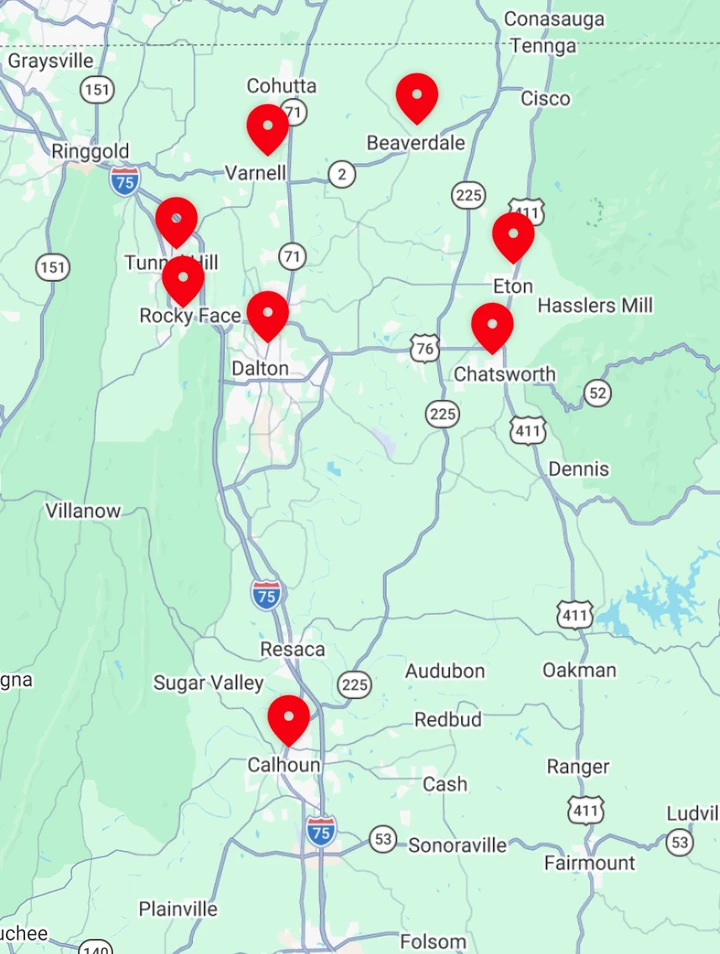
We provide mini-split maintenance in Dalton, Chatsworth, and throughout the communities below. Each visit follows the same process wherever the home is located, and our service area overview shows our full coverage.
-
Dalton, GA — Dalton homeowners can read about our ductless tune-ups on the Dalton page. -
Rocky Face, GA — The Rocky Face page describes ductless care for households in the community. -
Varnell, GA — Our Varnell page covers routine mini-split visits for local homes. -
Beaverdale, GA — The Beaverdale page outlines our approach to ductless maintenance in the area. -
Eton, GA — Our Eton page details mini-split tune-ups for homeowners in the city. Calhoun, GA — Calhoun is among the communities we serve for ductless maintenance. Tunnel Hill, GA — Tunnel Hill is among the communities we serve for ductless maintenance.
Mini-Split Maintenance Questions Answered
Each indoor head gets its own inspection. We clean the filters and front panels, inspect the indoor coil for dirt and biological growth, check the blower wheel and fan motor, and confirm that the louvers move freely. We also clear the condensate drain and check the drain pan for standing water. Each head's findings go into the written summary, so a change in one room can be compared with that head's own history.
One outdoor unit can serve several indoor heads, so we look at the system as a whole and then check each head separately. The outdoor condenser is inspected once, while each indoor head is tested for airflow, temperature response, and drainage. Readings are recorded by room, which makes it easier to tell whether a problem belongs to one zone or to the shared outdoor equipment.
Each indoor head has its own condensate drain, and a blocked drain can cause water to collect around the unit or drip onto the floor. During a tune-up we clear each drain line, check that it slopes away from the head, and inspect the drain pan for standing water or algae. Drain condition is recorded for every head, so a slow clog can be spotted before it causes water damage.
Filters are the simplest thing a homeowner can keep up between visits. Check each indoor head's filter regularly, and clean or replace it when it looks dusty, since restricted airflow reduces comfort in that room. Keep furniture and curtains clear of each head so air can move freely. If one room feels weaker than the others, note which head serves it and mention it at your next visit.
Yes. The remote, wall controller, and any room sensors are part of the visit. We confirm that each controller sends the right commands to its indoor head, that the head responds, and that the displayed settings match what the system is doing. Controller and sensor problems can look like equipment faults, so checking them first helps us tell the difference before any part is replaced.
Yes. The line set carries refrigerant between the outdoor unit and each indoor head, so we inspect it for damage, cracks, and worn insulation. We check how the lines are supported and whether they are protected where they pass through a wall or across the ground. Refrigerant pressures are read and recorded during the visit, and any sign of a leak is explained along with the repair options and their likely reliability.
Both are maintenance visits that check airflow, electrical parts, controls, and performance, but a ductless tune-up adds steps that a ducted system does not need. Each indoor head is inspected separately, and its drain and controller are checked room by room. The outdoor unit is reviewed for the refrigerant lines that connect every head. If your home has both kinds of system, we record each one separately in the written findings.
It can. A clean indoor head moves air more freely, and a clean outdoor coil releases heat more easily. Our tune-up measures how each head and the outdoor unit perform, then explains which items affect comfort and operation most in your home. We do not promise a specific savings figure, because the effect depends on the equipment's age, its condition, and how each room is used.
Yes. A room can feel fine while a head's filter is restricted, its drain is slowly clogging, or its controller is sending the wrong signal. Those issues often build quietly, so checking every head on a regular schedule gives us a chance to catch them while they are still small. The written summary notes anything unusual, even if that room has not raised a concern yet.
Yes. We work on all makes, so our team can review a ductless system installed by another company, including its indoor heads, outdoor unit, and controls. We then explain the routine care it needs. Some older or unusual arrangements may need a closer look before we can say what they require, and we will tell you plainly what we can and cannot confirm. You decide what goes ahead.
Have a Question We Didn't Answer? Contact Us!
Submit QuestionComfort Services That Pair Well With Ductless
Many homes run more than one comfort system, and a visit to one often shows useful information about the others. Our services overview lists everything we offer.
Plan Your Ductless Tune-Up With Our Maintenance Contractor
A ductless system that is cared for on a regular schedule is easier to live with than one that is only serviced after a room goes quiet. Our team will explain the visit, the readings we take at each head and at the outdoor unit, and the findings we share, so you can decide what fits your home.
We serve Dalton and Chatsworth from our on-site showroom and fabrication shop, and we are glad to talk through your options by phone or in person. Tell us about your indoor heads, and we will help you plan the next step.